

Much of anxiety is rooted in fear of the “big bad thing” happening. It’s the unknown, unplanned, or overwhelming thing that could occur next. Worry happens when the brain can’t predict consequences, so it makes something up - usually a blob of badness.
I don’t know what I’d do if I can’t pay my bills.
I can’t live without him.
If she find out, I’ll be in big trouble.
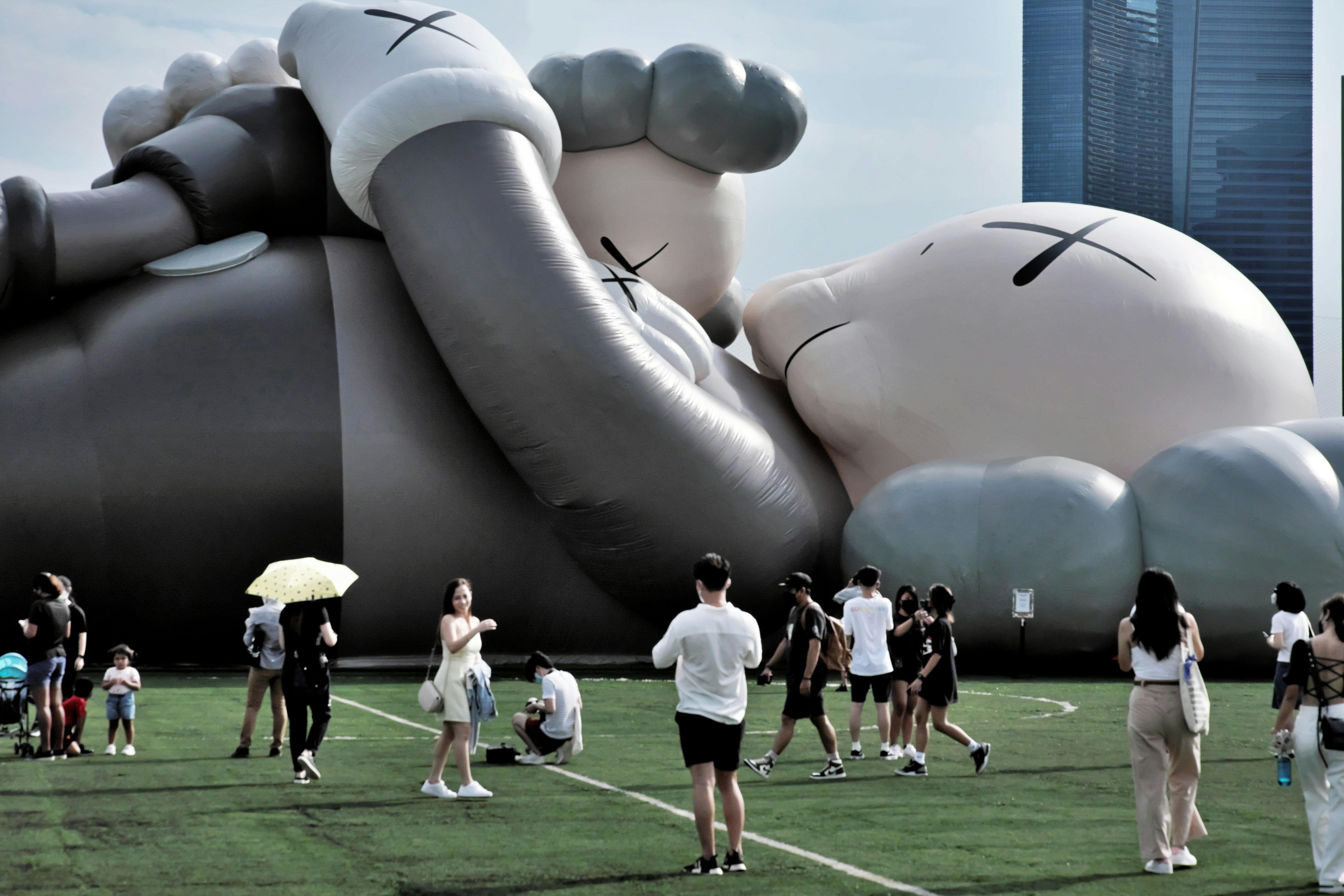
Your instinct is to shrink away from the big bad thing looming in the margins. The key is to go towards it, deal with it, and move on. Otherwise, you’re letting it control you and I know you’re stronger than that. It’s time to look under the bed or open that dark closet.
If you could edit out the experience of anxiety in humans, would you do it? I posed this question to a class of grad students once and they universally agreed that anxiety was bad. Until….I asked them to explore the consequences. With appropriate intensity, anxiety is a motivator, protector, and messenger. It’s only a problem when it takes up too much space in your brain.
I’m not typically that anxious. I don’t know if it’s just my biology or if it’s because I use really effective techniques to manage it. My dad once told me that I could worry about a situation and the outcome would be the same if I didn’t worry at all. This has stuck with me - the anxiety is extra and unnecessary to fixing something.
Our goal isn’t to extinguish anxiety but to harness it. First, we’ve got to shrink it to fit back in its box. Whenever it gets to be too much, try out one of these techniques. Sometimes, I cycle through all of them until I feel better.
1. Contingency Plans
Anxiety is chaotic and planning creates predictability. Giving yourself structure is an anti-anxiety strategy because we turn the unknown into a path. What would you do first if the bad thing happens?
Let’s apply it to getting to sleep. The goal is to rest - whether it’s tonight or eventually. Make the goal happen one way or another. Plan out the tools you might need and start with the least intervention. If one doesn’t work, step it up.
If I can’t get to sleep, the whole day will be ruined!
Plan A - Do a sleep hygiene routine to get you in a sleepy mood.
Plan B - Take a sleep aid like melatonin or benedryl.
Plan C - Take a stronger sleep aid or anti-anxiety med.
Plan D - Give up and do something fun or mindless and go to bed earlier tomorrow.
2. Worst Case Scenario
This is a companion to Contingency Planning but it jumps to the worst you can imagine and challenges you to figure it out. Can you survive the big bad thing if it happens?
If I can’t finish this project on time, they’ll fire me!
The worst case is you’re out of a job. It’s not what you want but there’s unemployment and other jobs. It might end up being the best thing that could happen to you. What evidence do you have that you’ll get fired? What are the chances? Probably low but just in case, you’re ability to imagine the worst and deal with it quells anxiety and clears the bandwidth of your brain so you can focus on the job at hand.
3. Small Decisions
Anxiety freezes decision making - especially when you don’t have enough information to guarantee the outcome. We get afraid to make the wrong choice or of making mistakes. We end up in the state of decision by indecision and let opportunity pass us by.
Should I take the leap and quit my job?
Do I buy the expensive one or cheap one?
Do I keep perfecting my essay or just post it?
We default to inertia because it’s safer. Start by breaking down the decision and see if there’s a way to get more information to sway you one way or another. Map out what would happen if you did the next thing in the process. Investigate and seek out feedback. Big decisions are just a series of small ones. Ask trusted others for opinions, research and plan, and run small experiments.
4. Reframe What’s Happening
Anxiety tells you a story of what’s happening and it’s never great. A slew of automatic assumptions color the way you see a situation. Old beliefs act as truths and get you stuck in a singular way of seeing something.
Challenge yourself to a different relationship to the big bad thing. Watch yourself having a reaction and ask if there’s another way to look at it. Remind yourself that worry is extra, not required to function, and even gets in the way.
Maybe this isn’t as bad as I’m making it out to be.
I’ve dealt with this before and I can do it again.
My brain says this is a crisis but all I can do is sort it out.
Will I even remember or care about this in a year? Five years?
So much of our problems stem from the lens we view it with. It’s habit - we think of ourselves and situations in familiar ways. We trick ourselves into thinking we need stress as a motivator. Maybe you don’t have to stress out anymore to get something done.
5. Take Action and Let Go
When you powerless, anxiety makes you think you’re doing something. We jump on the hamster wheel of worrying and GO! But it’s wasted energy - energy you could be using for other things, including solving the current issue.
Ask yourself - is there anything I can do right now about the big bad thing?
If so, do it. Make the phone call, write the email, or take an action.
If there’s something you can do in the future (because you’re still awake worrying), put a reminder in your phone to do the thing.
If there’s nothing you can do right now, box up the worry and put it on the shelf. Imagine placing it on top of a cloud that floats away. Don’t worry, it’ll drift back. Remind yourself that there’s nothing you can do right now each time the worry thought pops back up.
Make contingency plans for the big bad thing (see above). If you don’t hear back from someone, plan to follow up. If it all falls apart, what’s next?
Accept the reality and decide what’s in your sphere of control and influence. Everything else is outside your reach. There’s freedom in realizing just how much isn’t up to you.
Face the fear and shame. Own it and no one can use it against you. Claim imperfection as a human right. You’ve done all you can do right now.
We’re All Making It Up as We Go Along
One privilege of being a therapist is I get to see behind everyone’s curtains. Surprise - we all think everyone is doing it better and we’re fucking it up. In reality, every single person is in the stream of life, struggling to grow and learning progressively new lessons. We’re all making it up as we go along. Anxiety is a universal experience and we can learn to harness it. Tame it into submission by aiming for a default inner calm. If anxiety isn’t required here, what will you do next?