

Divorce was bearable because of Kirby and Penny. After my wife killed herself, Penny, Oliver and Fiona kept me alive. We survived it together.
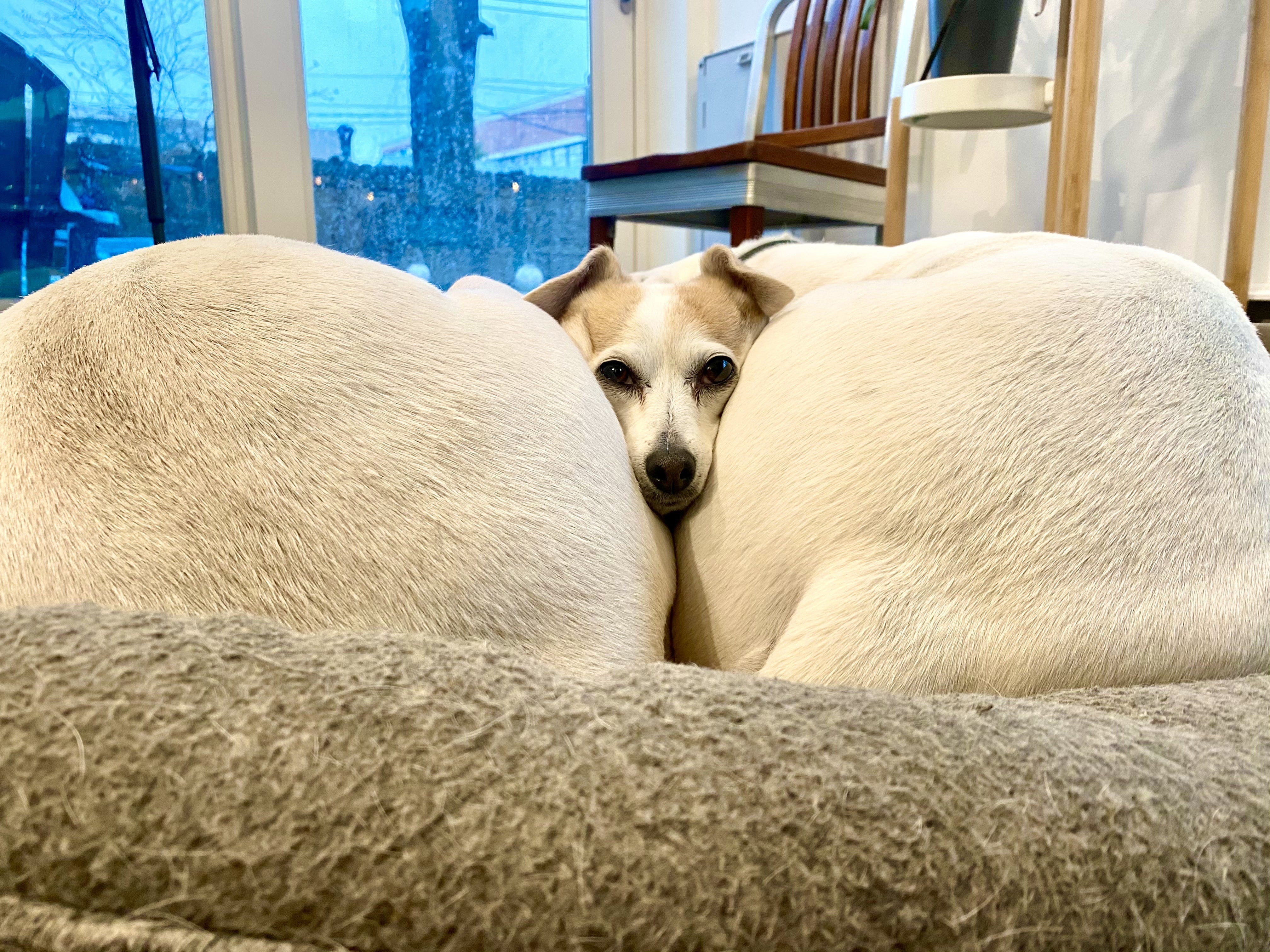
Dogs comfort and support us through hard times. They don’t need to understand English, Spanish or whatever language because they understand our states. They read our signals and respond accordingly. Human–dog bonds calm your body and reduce stress for both of you. Amazingly, dogs use attunement and compassion rather than empathy. They don’t match our emotions, they pull us chilling out with them. This is a lesson in how we can better support each other.
Doggie Evolution
Evolution has produced pretty smart canines who essentially domesticated themselves. Run off from prehistoric campfires, the aggressive wolves lost out to the calmer, more tolerant ones. These chill wolves became today’s dogs and they learned to read our expressions, interpret tone of voice and make eye contact. They even developed enzymes to process carbs for us. Not a bad trade off for warmth and dinner scraps.
Compared to wolves, dogs have lower baseline fear responses, greater tolerance for unpredictability and greater motivation to seek reassurance from humans. As they evolved to understand, cooperate with, and emotionally bond to us, dogs cemented their place as our life companions.
Doggie Attunement and Co-Regulation
Dogs don’t just notice human emotions, they biologically synchronize with us. They engage in the same emotional energy field as their owners. They pick up on vibes and act restless when you’re anxious and sit closer when you’re upset. Basically they’re canine mood barometers.
Outside of other primates, dogs are basically the only species that have specialized brain regions to process human faces. When they pick up on your emotions, they’ll first “freeze” in attention to get more information about you. They can distinguish anger, fearful and sad emotions just from their human’s tone of voice. Fiona can tell by the way I say her name whether she’s in trouble or I want to snuggle.
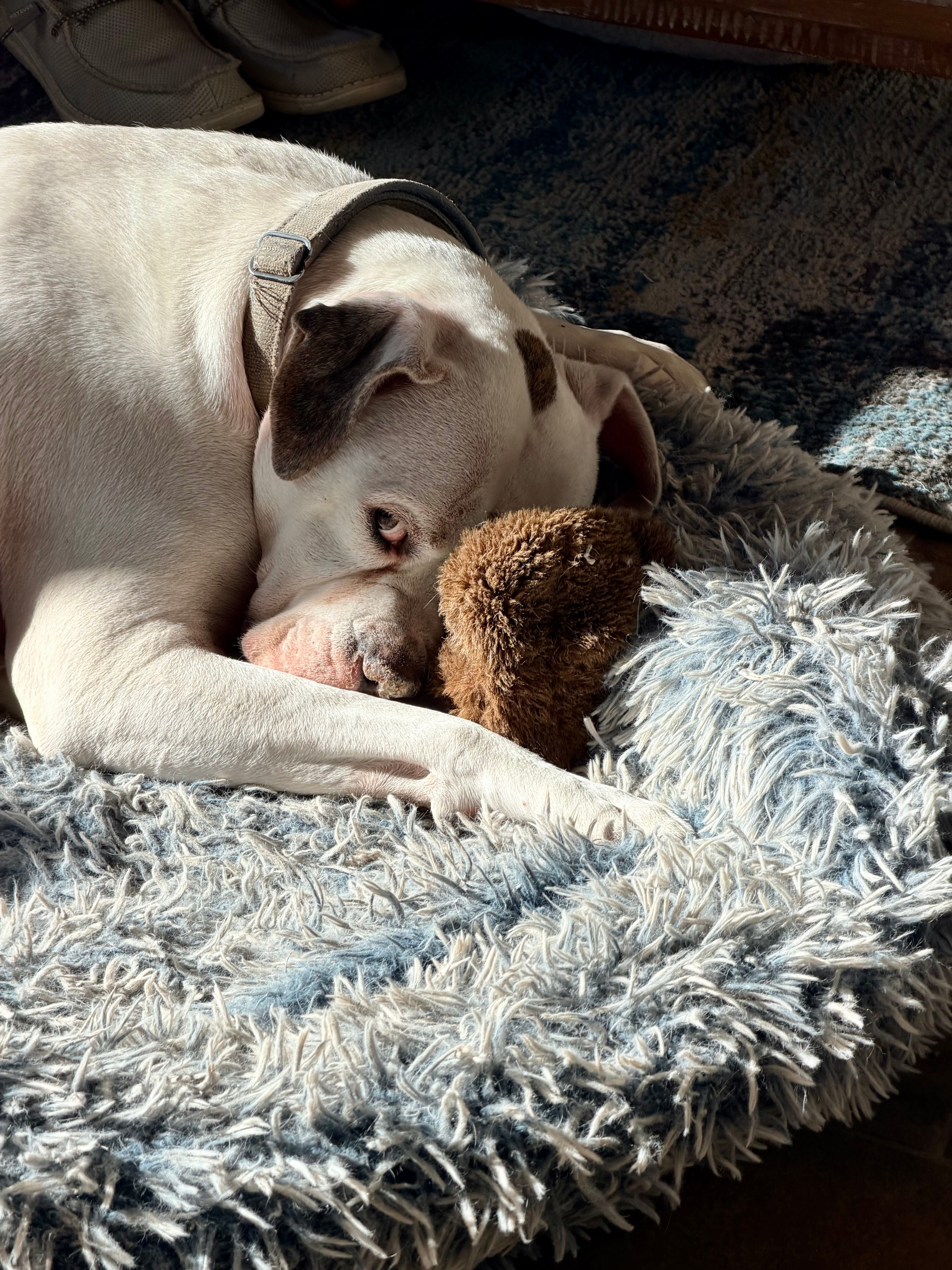
They rely on prosody - pitch, rhythm, intensity of your voice - more than words. Just try it with your dog. Sweetly saying “You’re the worst dog in the world” in a high pitch results in tail wags. Calm, steady tones reduce doggie stress whereas sharp or angry tones elevate arousal and put them on alert. You can tell a lot about an owner from how their dog behaves.

Eye contact triggers a surge in oxytocin for you and your dog. This is the same hormone involved in mother-infant bonding. Some people in my life have been uncomfortable with the love affair Penny and I share. But I say gazing into each others’ eyes and exchanges little kisses doesn’t mean I don’t also love my partner. There’s no cheating involved; I’m just really bonded with my dogs.
Doggie nervous systems mirror our own. When you’re chill, your dog’s heart rate is lower. Get stressed out and your dog’s cortisol levels jump alongside yours. Long-term studies show dogs’ baseline stress tracks their owner’s stress—not their own temperament.
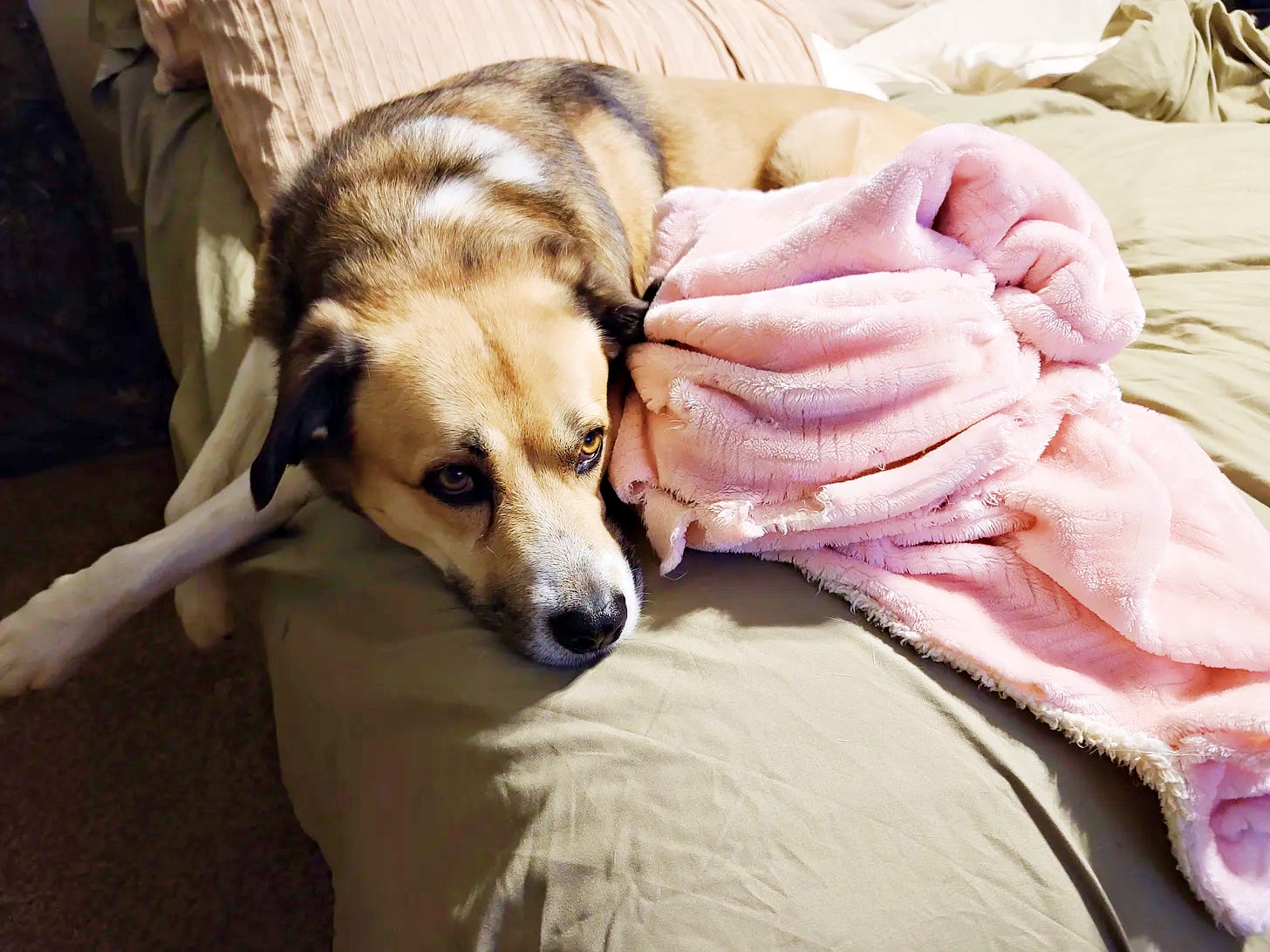
Dogs are exceptionally attuned to body cues. Dogs just “know” when something is wrong with you without anything being said. They learn your patterns. Your distress kicks off a doggie co-regulation process. For instance, sadness has a physiological signature to which dogs are exquisitely sensitive. They notice the shift in your tone of voice, movement and muscle tension, altered breathing, and bowed posture. Before you consciously register your own emotional shift, your dog is already invading your personal space and demanding attention.
How Dogs Support Us Through Change and Loss
Dogs help us through change and loss by lending us their nervous systems. Dogs provide continuity when everything else is falling apart. The consistency of their routine provides stability to your stressed nervous system. Research shows dogs can reduce anxiety, depression, stress, and distress as well as increase overall well-being. They help regulate blood pressure, heart rate and cortisol levels. While they may not know why you’re upset, they still know what to do to help.
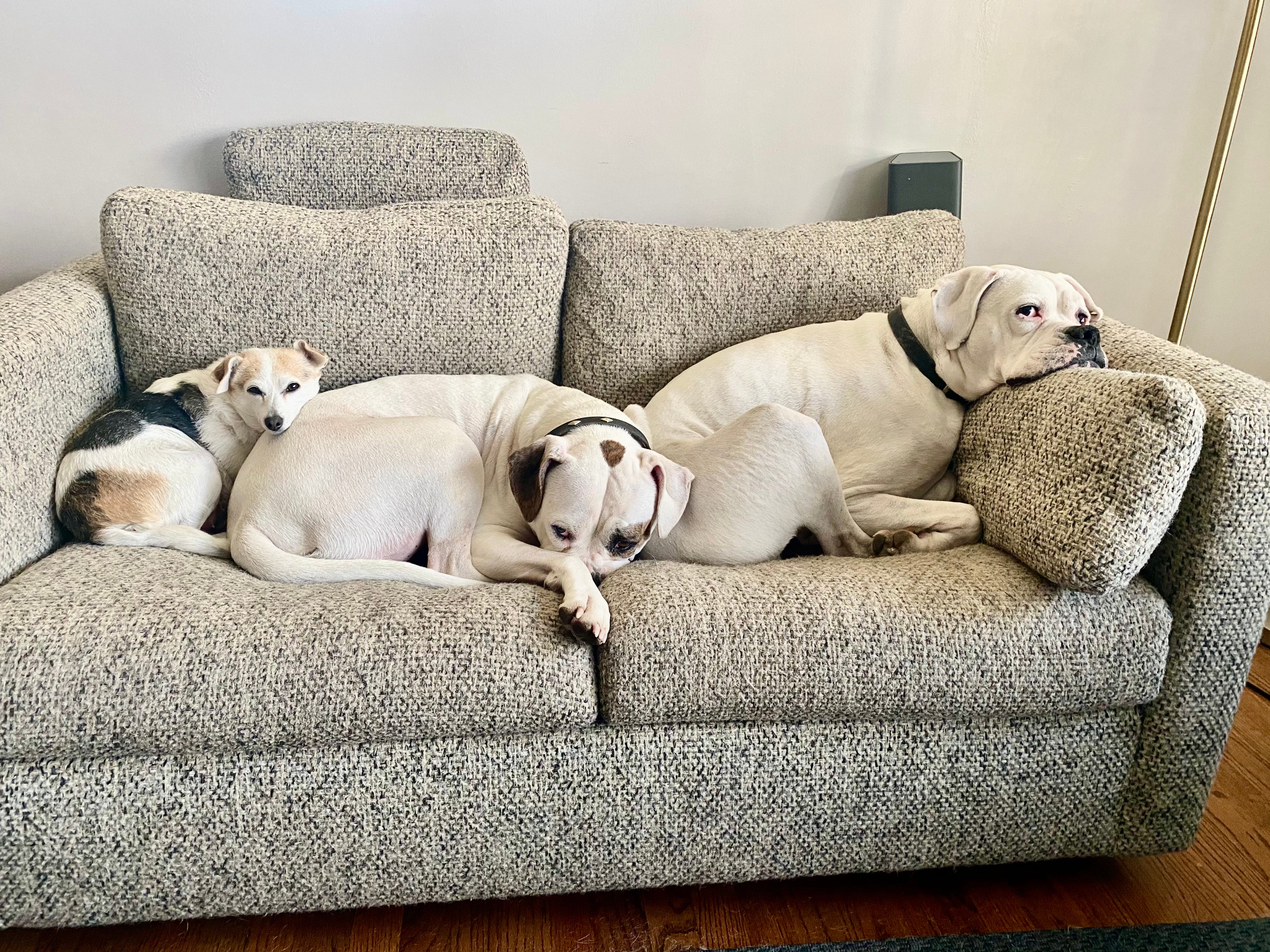
They keep us in the present moment. Grief makes us time travel to the past. It’s easy to get stuck in loops. Dogs drag us back to the present with needs for attention, food, play and of course, bones. They give us a sense of purpose without requiring that we feel better or get over anything.
Dogs force us to socially interact and this reduces loneliness. They get us out of the house for walks, dog park visits, and treats from the pet store. The especially cute and friendly ones get extra attention and make us talk to strangers. Dogs are predictable, nonjudgemental companions no matter what you’re going through. We depend on each other and most of the time, I’d say we get the better end of the deal.
Therapy is Great (But Also Get a Dog)
Therapy helps. Medication helps. Insight helps. But sometimes what keeps you sane is a warm body next to you on the couch. Whenever life hands you a shitburger in the form of loss, change or grief, a dog will help you eat it. Dogs don’t require you talk through your problems but if you’re in the mood, they’ll listen with the rapt attention of a client-centered therapist offering unconditional positive regard.
Just living alongside a dog, whether yours or someone else’s, injects a little positivity into life. My babies were there for me during the isolation of lockdown and never worried about catching my cooties. We spent so much time together that I had the chance to get to know their individual personalities even deeper. There may even be Covid videos of Fiona and I singing in unison. I hope they never make it to silly dog compilation vids but you never know. Dogs love you no matter what. You might be socially awkward, depressed, sick, or clingy but dogs will always think you’re awesome.
Dogs don’t make sense of loss for us; they make it survivable. They sit. They stay. They offer a calming presence. They don’t rush the process or ask us to be different than we are. And it’s enough. Maybe that’s what support actually looks like.
There is a symbiosis.
I will say in defense of the cats world they same condition exists where they are chemically and emotional connected to us, recognizing our patterns and behaviors and when there is a shift away from the normal due to stress or emotional changes.
Pets are a tremendous support, even when there are other humans and around, partly because any verbal communication is one way, allowing us the space to ‘get it all out’ uninterrupted.